
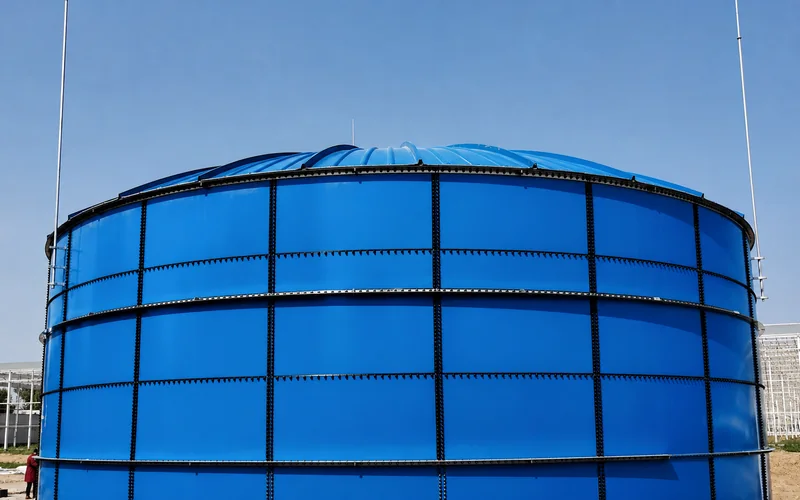
Leachate and industrial wastewater storage projects can be more demanding than ordinary water storage because media conditions may vary over time. Project teams should avoid choosing a tank route based only on capacity and price.
Start with media information
Useful information includes pH range, temperature, chloride or chemical exposure, suspended solids, odor concerns, gas generation, and whether the tank is part of equalization, treatment, emergency storage, or process buffering. This data helps clarify coating, material, roof, and accessory requirements.
Corrosion and roof considerations
GFS tanks, epoxy tanks, stainless steel tanks, HDG tanks, and other storage routes can each fit different conditions. Roof or cover selection should consider odor, rainwater control, gas handling, maintenance access, and local environmental requirements. For a broader comparison, read our water and wastewater tank selection notes.
Quality checks and installation planning
Project teams should review coating checks, panel packing, nozzle arrangement, foundation interface, and installation method. These details are especially important when the project site has limited access or strict construction sequencing.
Documents for buyer qualification
Company profile, certificate archive, project references, inspection notes, and installation support documents help owners and EPC teams evaluate supplier readiness. The Center Enamel certification page provides a structured starting point for document review.
Practical takeaway
Leachate and industrial wastewater projects need early technical alignment. A clear review of media data, tank route, roof requirement, and documents helps prevent unsuitable comparisons between different supplier proposals.
Leachate and industrial wastewater are variable by nature
Leachate and industrial wastewater can change with season, process source, treatment stage, rainfall, or operating conditions. This variability makes early media review important. A tank route that works for ordinary municipal water may not be appropriate for higher corrosion exposure, odor, gas generation, or chemical variation.
Media data that helps supplier review
Buyers should provide pH range, temperature, chloride or salt exposure where known, chemical composition if available, suspended solids, odor concerns, gas generation, and whether the tank will store raw, equalized, treated, emergency, or process wastewater. If exact values are not available, project teams should at least define expected ranges and identify uncertain items.
Tank material and coating comparison
GFS tanks, epoxy coated tanks, stainless steel tanks, HDG tanks, and concrete tanks may all appear in project comparisons. The comparison should include service environment, roof or cover scope, installation schedule, maintenance expectation, coating review, accessories, and document requirements. A low initial price can become misleading if the proposal excludes roof details, nozzle requirements, or corrosion-related review.
Roof and odor control
Leachate and industrial wastewater tanks may require stronger attention to roof selection, venting, odor control, gas exposure, and maintenance access. Roof type affects not only cost but also environmental control and inspection planning. If the project uses an aluminum dome roof or other cover system, review the aluminum geodesic dome roof review points for related questions.
Documents that reduce uncertainty
Useful review documents include media data, tank proposal, coating references, certificate package, installation scope, foundation assumptions, roof details, and packing plan. The broader water and wastewater tank selection guide can help teams compare potable water and wastewater review logic.
Practical takeaway
For leachate and industrial wastewater, technical clarity is more important than fast quoting. A supplier can give a better proposal when the buyer provides media data, roof expectations, accessory requirements, and project constraints early.
Common risks in leachate and industrial wastewater review
The biggest risk is treating media data as optional. If pH, temperature, chemical exposure, solids, gas, or odor conditions are unknown, the proposal becomes less reliable. Buyers should identify what is known, what is uncertain, and what assumptions the supplier is using. This is better than pretending the project is fully defined.
Another risk is ignoring roof and accessory requirements. Leachate and industrial wastewater tanks may need covers, vents, odor control, special nozzles, or maintenance access. These items affect both cost and technical suitability, so they should be included in the early review instead of added after price comparison.
When media data and roof requirements are clearer, the main site page for leachate storage tanks can support product-level comparison.