
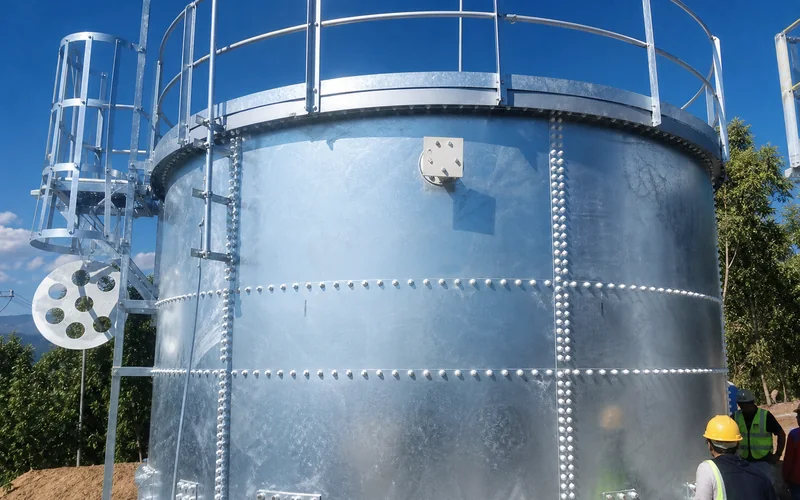
Agricultural water storage projects can include irrigation water, livestock water, farm process water, rainwater collection, or reserve storage for remote sites. These projects often need practical installation, clear access planning, and a durable tank package that fits local site conditions. HDG tanks and other bolted storage routes may be reviewed when the buyer needs modular delivery and efficient field assembly.
Start with site and water conditions
Useful project information includes required capacity, location, water source, expected water quality, temperature, outdoor exposure, foundation condition, access road, unloading space, and whether the tank must connect with pumps, irrigation lines, or treatment equipment. If the site is remote, packing and installation planning become especially important.
HDG tank review points
Hot-dip galvanized tank review should consider stored water condition, corrosion exposure, roof or cover requirement, accessory scope, maintenance expectation, and installation handling. Buyers should not compare only tank diameter and height. A complete comparison should include roof, nozzles, ladders, platforms, vents, overflow, drain, bolts, sealants, packing, and document support.
Documents and project communication
Agricultural water projects may not always have the same formal submittal process as municipal or industrial projects, but documents still matter. Buyers should request a clear proposal, packing list, accessory list, installation notes, and any required company or certificate documents. The industrial water tank RFQ checklist gives a useful data structure for preparing the request.
Installation planning for remote sites
Remote sites can create delays if unloading space, lifting equipment, tools, or foundation readiness are not confirmed. The installation team should receive drawings and packing lists before the goods arrive. If local labor is used, document clarity becomes even more important. The installation preparation checklist explains how to organize these points.
Main product reference
For product-side comparison, buyers can review agricultural water storage tanks on the main product site. Center Enamel company pages can then support supplier background, qualification review, and document preparation.
Practical takeaway
Agricultural water storage tank selection should be practical and site-specific. Clear capacity, water condition, accessory scope, packing, and installation information help buyers compare HDG tanks and other bolted storage routes without missing important project details.
Agricultural water projects need practical site data, not only capacity
Agricultural water tanks are often installed in locations where site access, unloading equipment, foundation readiness, and local labor availability matter as much as tank material. Buyers should describe whether the tank supports irrigation, livestock water, rainwater collection, process water, reserve storage, or another farm-side use. The water source can also matter: groundwater, surface water, treated water, rainwater, and reused process water may create different corrosion, sediment, or maintenance expectations.
The inquiry should include project country, site access, available footprint, preferred tank height, foundation condition, inlet and outlet requirements, overflow, drain, roof or open-top expectation, pump connection, and whether future expansion is possible. Without this information, proposals may be technically incomplete even if the quoted capacity is correct.
HDG tanks should be reviewed with water chemistry and exposure in mind
Hot-dip galvanized tanks use a zinc coating on steel, but suitability depends on water chemistry, external exposure, service expectation, and maintenance practice. Buyers should avoid treating HDG as a universal low-maintenance choice for every water condition. If the water contains unusual chemicals, high salinity, strong acidity or alkalinity, or aggressive process contamination, the supplier should review whether HDG is appropriate or whether another tank route is more suitable.
Roof or cover choice also matters. Agricultural water may need protection from debris, sunlight, algae growth, animals, dust, or rainwater contamination depending on use. If the tank is part of a potable or animal-water system, local hygiene expectations should be discussed by the project owner or consultant.
Remote installation changes the document requirement
Remote or farm-side installations may have fewer formal submittals than municipal projects, but they often need clearer practical documents. Packing lists, panel marks, accessory lists, unloading notes, tool requirements, and installation sequence should be easy to follow. If the site team has limited experience with bolted tanks, missing documents can create delays and handling damage.
Buyers should also clarify who supplies sealants, bolts, ladders, platforms, roof parts, lifting equipment, torque tools, and supervision. A low-cost proposal may become expensive if installation responsibilities are unclear.
Agricultural water tank comparison checklist
- Water source, water chemistry concerns, storage purpose, and maintenance expectation
- Tank capacity, footprint, height limit, roof or cover requirement, and pump connection
- Site access, unloading method, foundation readiness, local labor, and tool availability
- Material route for shell, roof, nozzles, bolts, ladders, platforms, and accessories
- Packing list, installation notes, and responsibility for site supervision or guidance
These points help buyers compare HDG tanks, GFS tanks, epoxy coated tanks, and other storage routes based on real farm-site conditions rather than a simple material label.