
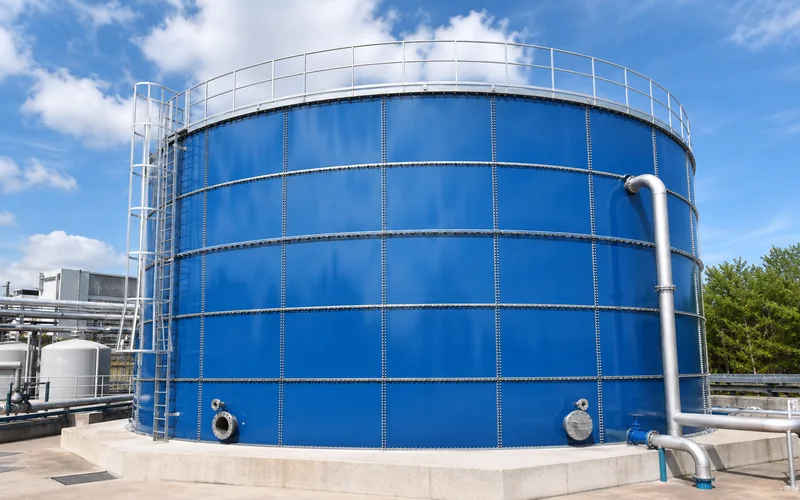
A clear RFQ is one of the easiest ways to improve industrial water tank supplier response quality. When the buyer only sends tank capacity, the supplier must make assumptions about stored media, site location, design loads, roof scope, accessories, coating route, and installation responsibility. Those assumptions can make early quotations difficult to compare. A better RFQ gives enough project context for a meaningful technical review.
Basic project information
The first RFQ section should identify project location, intended use, stored media, required capacity, expected tank diameter or available footprint, required shell height if known, design standard expectation, and schedule. For industrial water, process water, wastewater, or reuse water, buyers should also provide pH range, temperature, chemical exposure, solids content, and whether the tank will be indoors or outdoors.
Tank package scope
Buyers should clarify whether the request includes tank shell only or a full package with roof, nozzles, manways, ladders, platforms, vents, overflow, drain, level instruments, anchor or base details, sealants, bolts, and installation support. The product site has a broader category page for industrial water tanks, while this brand site explains the company and document background for Center Enamel.
Coating and material route
If the buyer already has a preferred route such as GFS tanks, epoxy coated tanks, stainless steel tanks, or galvanized steel tanks, the RFQ should state it clearly. If not, the supplier should receive enough media and site data to recommend a route. For GFS projects, our GFS coating basics article explains why coating review should be connected to actual service conditions.
Documents and approval needs
Some projects need company profile, certificates, drawing submittals, inspection references, packing plan, and installation guidance before purchase approval. The buyer should state which documents are mandatory and which are helpful for internal review. This prevents late requests that may slow down procurement after the quotation has already been discussed.
Practical takeaway
A good RFQ does not need to be complicated, but it should be specific. Capacity, media, site, roof, accessories, coating, installation responsibility, and document requirements give suppliers the basis to prepare a more accurate proposal and reduce repeated clarification.
RFQ data should separate known facts from assumptions
Buyers do not need to know every engineering detail before contacting a supplier, but they should separate confirmed facts from assumptions. For example, capacity, project country, stored media, and expected application may be confirmed, while exact diameter, roof type, or nozzle schedule may still be under discussion. Stating this clearly helps the supplier prepare a preliminary proposal without treating assumptions as final requirements.
This distinction is especially useful for industrial water projects where process conditions can change. If the water includes chemicals, suspended solids, high temperature, cleaning agents, or variable pH, the buyer should flag those conditions even if exact values are not yet available. Early uncertainty is acceptable; hidden uncertainty is the problem.
Accessory scope can change the quotation significantly
Accessories often create large differences between proposals. Nozzles, manways, ladders, platforms, handrails, vents, roof openings, drain systems, overflow, level instruments, anchor details, bolts, sealants, and spare parts may or may not be included. A buyer who asks only for tank capacity may receive quotations with very different scopes.
A better RFQ states which accessories are required, which are optional, and which need supplier recommendation. If the project has an existing piping layout, nozzle location and elevation should be shared. If the layout is not ready, the buyer can still request a preliminary nozzle schedule and identify items that will be confirmed later.
Documents make supplier review more efficient
Industrial water tank projects may require company profile, certificate archive, production capability notes, drawing references, coating notes, inspection references, packing plan, and installation guidance. Providing the expected document list early helps the supplier understand the level of support required. This also helps the buyer compare supplier readiness, not only product pricing.
For international projects, document language, unit system, local standard references, and owner approval process should also be clarified. The more clearly the RFQ describes these expectations, the more useful the supplier response will be.
A practical RFQ structure
A clean RFQ can be organized into six parts: project background, stored media, tank size and site data, product or coating preference, accessory and roof scope, and required documents. This structure gives both commercial and technical teams a shared basis for review. It also reduces the number of repeated emails before the supplier can prepare a meaningful proposal.