
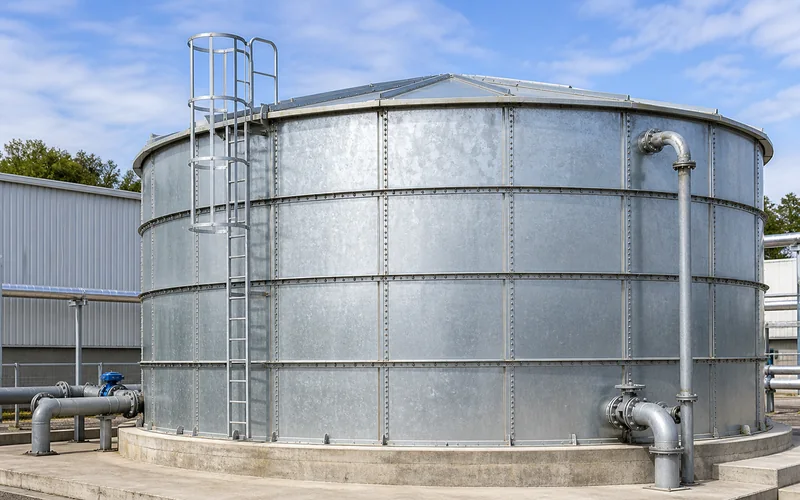
Successful bolted tank installation depends on more than the tank package itself. Site readiness, foundation accuracy, unloading space, lifting arrangement, tools, safety access, and document control all influence the installation schedule. Buyers can reduce avoidable delays by confirming these points before containers arrive.
Foundation and interface review
The tank foundation should be checked against the approved drawing before installation. Important details include levelness, diameter, anchor or embedded parts where applicable, drainage, concrete curing time, and access around the tank perimeter. If foundation assumptions are still unclear, review them together with the manufacturing and installation support information before site work starts.
Unloading and storage planning
Tank sheets, roof parts, bolts, sealants, nozzles, ladders, and accessories should be unloaded in a clean and organized area. Panels should remain protected from impact and should be sorted according to packing marks. A clear receiving plan helps the installation team identify parts quickly and avoid unnecessary handling.
Tools, lifting, and safety access
Project teams should confirm lifting equipment, torque tools, scaffolding or work platforms, temporary power, weather conditions, and site safety rules. Bolted tanks are modular, but the installation process still needs disciplined sequencing and controlled sealant application.
Documents to keep on site
Useful documents include installation drawings, packing list, nozzle schedule, accessory list, sealant guidance, bolt tightening notes, and foundation interface drawings. For a broader document list, see our bolted tank project documentation checklist.
Practical takeaway
Installation preparation should start before shipment, not after delivery. When the owner, EPC contractor, and supplier align the site conditions early, the tank package can move from unloading to assembly with fewer interruptions.
Start preparation before shipment
Many installation problems are created before the tank arrives on site. If the foundation is not ready, unloading space is not reserved, tools are not available, or installation responsibility is unclear, the tank package may wait on site while costs increase. Buyers should confirm site preparation during the production and shipping stage, not after receiving containers.
Foundation checks that matter
The foundation should be reviewed for levelness, diameter, concrete strength or curing status, drainage, embedded parts or anchors where applicable, and access around the tank perimeter. Any mismatch between foundation assumptions and actual site conditions should be solved before assembly. If the project uses a local foundation designer, supplier drawings and local engineering documents should be compared early.
Receiving and sorting the tank package
Bolted tanks include many parts: shell panels, roof parts, bolts, nuts, washers, sealants, nozzles, ladders, platforms, manways, and other accessories. The receiving team should check packing marks against the packing list and keep components protected from impact or contamination. Panels should not be dragged across rough ground, and sealing surfaces should be kept clean.
Installation sequencing and weather
Installation planning should consider lifting method, torque control, sealant application conditions, wind, rain, temperature, and safe access. Weather can affect lifting and sealant work, so the schedule should include realistic site conditions. For wastewater, leachate, or biogas-related projects, roof and nozzle interfaces may also require additional coordination with process equipment.
Link installation back to documentation
Installation is easier when documents are organized. The project documentation checklist covers the drawings, packing lists, installation notes, and quality references that should stay accessible on site. A disciplined document set helps the contractor avoid guessing and reduces repeated communication with the supplier.
Practical site-readiness questions
- Is the foundation complete and checked against the tank drawings?
- Is there enough unloading and staging space?
- Are lifting equipment, tools, and safe access ready?
- Are packing list, installation drawings, and accessory lists available on site?
- Has responsibility for installation, supervision, and local safety control been confirmed?
Common site preparation risks
The most common site risks are not always technical. They include late foundation completion, insufficient unloading space, missing lifting equipment, unclear tool responsibility, poor component storage, and incomplete document handover to the installation team. These issues can delay work even when the tank package itself is correct.
For international projects, language and document control also matter. Packing marks, drawings, installation notes, and accessory lists should be easy for the site team to follow. If the contractor receives documents too late, installation questions may appear after equipment and workers are already waiting on site.