
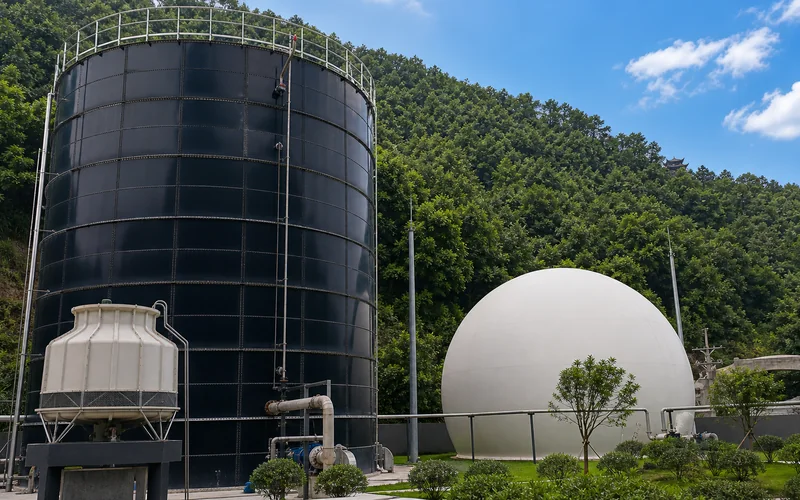
Biogas and anaerobic digestion projects often involve stored media, gas exposure, temperature, mixing, roof or cover requirements, and construction coordination. Before selecting a tank route, project teams should organize technical data and qualification documents clearly.
Stored media and operating conditions
The supplier should understand the media type, pH range, temperature, gas exposure, solids content, mixing method, and whether the tank is used for digestion, sludge holding, equalization, or other process stages. These conditions influence coating review, roof selection, nozzle positions, and accessory scope.
Why GFS tanks are often reviewed
Glass-Fused-to-Steel tanks are often considered for biogas and wastewater-related projects because the modular panels provide corrosion resistance and efficient site assembly. Project teams can review the basics in our article on GFS tank coating.
Document package for early evaluation
Useful documents include process data, tank size, roof or cover requirement, nozzle list, foundation assumptions, installation responsibility, certificate expectations, and project schedule. A clear package helps reduce repeated technical clarification during quotation.
Quality and certificate review
Buyers should connect coating performance with factory quality control, inspection records, and certificate scope. Our article on GFS tank manufacturing quality control explains how production checks and documentation support project review.
Practical takeaway
For biogas storage and digestion-related projects, technical data should lead the discussion. The better the media and site information, the more accurate the tank proposal and document review can be.
Biogas projects need more than a tank capacity
Biogas and anaerobic digestion projects usually require more detailed review than simple storage projects. The tank may interact with digestion process conditions, gas handling, mixing equipment, roof or cover systems, heating assumptions, sludge characteristics, and site operation requirements. A capacity figure alone is not enough for a responsible tank proposal.
Technical data to organize first
Project teams should prepare media type, pH range, temperature, solids content, gas exposure, operating level, mixing method, roof or cover requirement, nozzle schedule, and any process equipment interfaces. If the tank is part of a wastewater treatment plant, the project stage matters: equalization, digestion, sludge holding, and effluent storage can have different requirements.
Coating and corrosion review
GFS tanks are often reviewed for biogas and wastewater-related projects because they combine modular steel panels with a fired inorganic coating. However, coating suitability should still be reviewed against actual media and operating conditions. The GFS coating basics guide explains why coating route, inspection checks, and project context should be reviewed together.
Roof, gas, and accessory coordination
Biogas-related projects may involve roof or cover systems, gas collection, vents, mixers, pipe penetrations, platforms, and safety access. These details affect nozzle positions and installation planning. They should be included early in the document package instead of added after the tank shell proposal is complete.
Qualification and project documents
A practical early document package includes company profile, certificates, project references, process data, tank proposal, roof requirement, nozzle list, foundation assumptions, and installation responsibility. Buyers can use the certificate archive with technical documents to support internal prequalification.
Practical takeaway
For anaerobic digestion and biogas storage, the most accurate proposals come from clear process data. If media, gas, roof, equipment, and installation interfaces are defined early, supplier review becomes more technical and less speculative.
Common biogas tank review risks
Biogas projects can become unclear when tank review is separated from process review. The tank supplier needs to understand whether the tank is used for digestion, sludge storage, equalization, or another process stage. Mixer loads, gas interfaces, heating assumptions, cover type, and nozzle positions may all affect the final package.
Another risk is underestimating document coordination. Biogas projects often involve process designers, civil contractors, mechanical installers, and owners. Each party may need different drawings or data. A clear document index helps keep technical review, certificate review, and site preparation aligned.
For product-side review after the document package is defined, buyers can compare related anaerobic digester tanks information on the main site.