
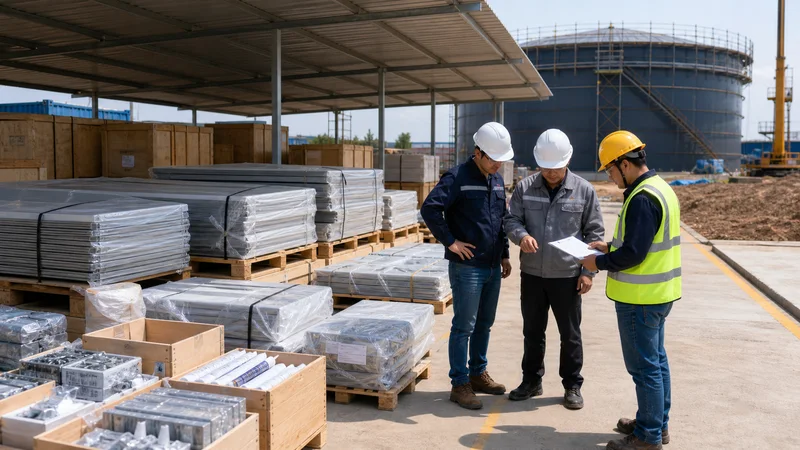
Bolted tank materials may arrive at the project site days or weeks before installation begins. During that waiting period, the project team must protect panels, fasteners, sealants, roof parts, accessories, small cartons, and documents from moisture, loss, mixing, and handling damage. Temporary storage is therefore not a simple housekeeping task. It is part of installation readiness and project risk control.
This topic is different from site receiving inspection. Receiving inspection confirms what arrived and records the condition at delivery. Temporary storage protection keeps those materials organized and usable until the installation team is ready to start assembly.
Why temporary storage needs control
Bolted tank packages include many different material types. Large panels need clean support and protected markings. Fasteners and small accessories need dry, traceable storage. Sealants and gaskets need protection from unsuitable temperature, sunlight, moisture, and package damage. Drawings and packing records need to remain available for the site team.
If storage is uncontrolled, the team may face missing cartons, mixed materials from different tanks, damaged packaging, unclear panel marks, expired or poorly stored consumables, or delayed installation. These issues are usually preventable if storage rules are assigned before unloading finishes.
Start after receiving inspection
Temporary storage should begin only after the receiving team has checked package count, visible condition, crate marks, and obvious shortages. That receiving record gives the storage team a clear starting point. If packages are moved before being photographed and counted, later teams may not know whether a problem happened during transport, unloading, or site storage.
The article on site receiving inspection for bolted tank deliveries explains how to create that first site record before materials are moved into storage.
Separate materials by tank, sequence, and use
When a project includes multiple tanks, different tank heights, or several accessory packages, materials should be separated by tank number, installation sequence, or package group where possible. Panels, roof parts, platforms, ladders, nozzles, bolts, sealants, and spare parts should not be mixed without a clear sorting plan.
Visible labels and package marks should be protected. If a label is damaged or hidden, the team should create a temporary site mark based on the packing list and photos, then record who made the mark and when. This prevents the installation crew from losing time identifying parts later.
Protect panels and coated surfaces
Bolted tank panels should be stored on stable supports that prevent direct contact with mud, standing water, or sharp objects. Packaging should remain intact unless controlled inspection or sorting is required. If panels must be opened, the team should avoid dragging, stacking mistakes, and uncontrolled contact with hard edges.
For coated panels, the site team should avoid storage conditions that expose materials to unnecessary impact, abrasion, contamination, or trapped moisture. Temporary covers should protect against rain while still allowing practical ventilation where needed. The goal is to preserve factory-prepared surfaces until installation begins.
Keep fasteners, sealants, and small parts dry
Small parts are often the easiest items to lose. Bolts, nuts, washers, gaskets, sealants, nozzles, fittings, brackets, and special tools should be stored in a controlled dry area with one responsible person or team. Open cartons should be resealed and marked after inspection.
Sealants and consumables should be stored according to supplier guidance and project conditions. The team should avoid leaving them in direct sun, wet areas, or scattered site locations. If the installation crew cannot find the correct small parts at the right time, assembly progress can stop even when the major panels are ready.
Connect storage with installation readiness
Temporary storage protection should feed into the installation preparation checklist. Before work starts, the site team should confirm that materials are still accessible, labels are visible, small parts are controlled, lifting access is clear, and no storage issue has become an installation constraint.
The industrial tank installation preparation checklist covers foundation, access, lifting, tools, and site readiness. Storage protection adds the material condition and material availability layer to that preparation.
Control documents and handover items
Documents, spare parts, and maintenance-related items should not be treated as loose extras. Packing lists, drawings, inspection references, spare-parts cartons, and maintenance notes should be stored in a known location and assigned to a responsible person. If these items are misplaced before installation, final handover becomes harder to complete.
The article on spare parts and maintenance handover planning explains why these items need control from project execution through final owner handover.
Practical temporary storage checklist
- Assign a responsible person for material storage, small parts, and documents
- Separate materials by tank number, package group, or installation sequence
- Keep package marks, panel labels, and accessory identification visible
- Store panels on stable supports away from mud, standing water, and sharp contact points
- Protect fasteners, sealants, gaskets, documents, and tools in a dry controlled area
- Record any package opening, relabeling, movement, shortage, or visible damage after receiving
- Confirm material access and condition before installation starts
When to escalate a storage issue
If storage inspection finds wet packaging, damaged coated surfaces, missing small parts, unclear labels, or unsuitable consumable storage, the issue should be recorded quickly. Some problems may only need site correction. Others may require technical clarification, replacement support, or project schedule review.
Clear photos, package marks, dates, and responsible-party notes make support faster. They also help distinguish between receiving findings, site storage findings, and installation findings.
Where product scope fits
Temporary storage rules are easier to apply when the supplied package and product route are clear. Buyers reviewing storage tank options can start with product information such as GFS tanks, then connect the selected package with packing records, receiving inspection, temporary storage protection, installation support, and handover documents.
Practical takeaway
Temporary storage protection helps keep bolted tank materials ready for installation. By controlling storage responsibility, package identity, coated panels, small parts, consumables, documents, and open issues before assembly starts, project teams can reduce avoidable delays and protect the value of the supplied tank package.