
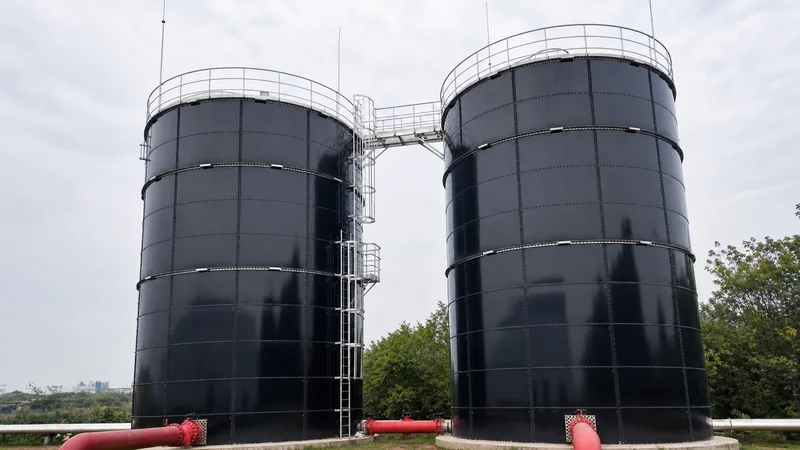
Wastewater storage tank projects can involve municipal treatment plants, industrial process water, food and beverage effluent, leachate, sludge, or emergency storage. Because media conditions can vary widely, supplier qualification should go beyond company size and price. Buyers need to understand whether the supplier can connect media review, coating route, factory quality control, documents, packing, and site support into one project workflow.
Review the stored media first
Useful media data includes pH range, temperature, chemical exposure, chloride or salt risk where known, suspended solids, odor concerns, gas exposure, and whether the tank stores raw wastewater, equalized wastewater, treated effluent, sludge, leachate, or process water. Without this data, suppliers may quote on assumptions that later need revision.
Check product route and project fit
GFS tanks, epoxy coated tanks, stainless steel tanks, galvanized tanks, concrete tanks, and other storage routes may all appear in wastewater comparisons. Buyers should compare the complete package: tank material, coating, roof or cover, nozzles, accessories, installation method, maintenance expectation, and document support. For product-side reference, the main site includes a dedicated page for wastewater storage tanks.
Connect quality control with documentation
A qualified supplier should be able to explain coating checks, panel inspection, packing marks, accessory matching, and installation notes in practical language. Documents should not be treated as a separate sales package; they should support real execution. Our bolted tank project documentation checklist gives buyers a way to organize company, technical, quality, packing, and installation documents.
Review installation and site support
Wastewater projects may have site constraints, odor control requirements, cover systems, mixer interfaces, or process equipment connections. Supplier review should therefore include foundation assumptions, unloading access, lifting method, nozzle schedule, roof interfaces, and responsibility for installation guidance. These points help prevent the tank from becoming isolated from the rest of the treatment system.
Practical takeaway
Wastewater tank supplier qualification is strongest when it starts with project data and ends with a clear document package. Buyers should ask whether the supplier can support the whole process from technical review to production, packing, delivery, and installation communication.
Qualification should include application experience
Wastewater tank supplier qualification should include more than factory scale. Buyers should ask whether the supplier has experience with similar wastewater conditions, such as municipal wastewater, food processing effluent, landfill leachate, sludge storage, equalization tanks, or industrial process water. Similar experience does not automatically prove suitability, but it gives the buyer a better basis for technical questions.
Application experience is useful when reviewing roof selection, odor control, coating exposure, nozzle arrangement, mixer interfaces, and installation sequencing. If a supplier can explain how these issues affect the tank package, the buyer can have more confidence in the review process.
Factory documents and project documents are both needed
Factory documents show whether the supplier has production control, quality systems, and inspection discipline. Project documents show whether the supplier can translate that factory capability into a usable tank package. For wastewater projects, buyers should review both. A certificate list without a technical proposal is incomplete; a technical proposal without quality and packing references is also incomplete.
Useful project documents may include general arrangement drawings, nozzle schedule, accessory list, coating references, roof or cover notes, foundation assumptions, packing list, installation guidance, and inspection references. When these documents are consistent, the project team can review the supplier more efficiently.
Clarify responsibility before installation
Wastewater tanks often connect with process equipment, civil works, piping, access platforms, and local safety requirements. Buyers should clarify who is responsible for foundation design, tank installation, lifting equipment, site supervision, local permits, and final commissioning support. If responsibilities are unclear, the project may face delays even when the tank package is correctly manufactured.
Supplier qualification should therefore include communication ability and document response speed. A supplier that can answer technical questions clearly and organize documents on time can reduce project risk.
Practical qualification checklist
- Can the supplier review media data and explain coating or material assumptions?
- Are company certificates and factory capability documents available?
- Can the supplier provide drawings, nozzle schedule, packing list, and installation notes?
- Is the quoted scope clear for roof, accessories, bolts, sealants, and support documents?
- Does the supplier understand site constraints and installation responsibility?
These questions help buyers evaluate whether a wastewater storage tank supplier is prepared for real project execution, not only initial quotation.