
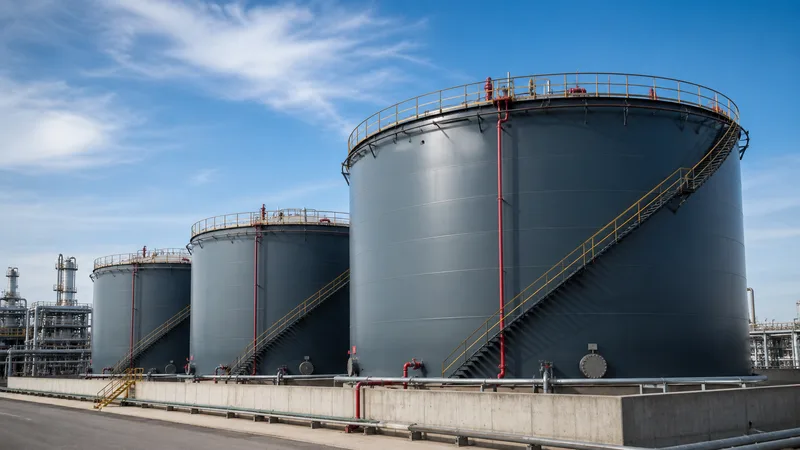
Industrial storage projects may compare API 650 welded tanks, bolted tanks, GFS tanks, epoxy coated tanks, stainless steel tanks, or other routes. The right comparison depends on project standard, stored media, capacity, site work, schedule, installation resources, inspection requirements, and owner preference. Buyers should avoid treating “welded” and “bolted” as simple price labels.
What API 650 usually means in review
API 650 is commonly associated with welded steel tanks for oil, water, and other storage applications where the project requires that standard or a related engineering basis. The review often involves design assumptions, material, welding, inspection, foundation, site fabrication, and documentation. Buyers should confirm whether API 650 is mandatory, preferred, or only used as a reference in early discussion.
How bolted tank review differs
Bolted tanks are typically reviewed around modular panels, factory coating or material route, packing, site assembly, sealant or gasket method, accessories, roof scope, and installation sequencing. Much of the quality control happens before shipment, but site preparation still matters. The bolted tank documentation checklist explains the document package buyers should organize.
Compare project scope, not only tank type
A fair comparison should include engineering responsibility, foundation assumptions, coating or material route, roof, nozzles, access systems, inspection requirements, packing, site work, schedule, and installation support. If one proposal includes more accessories or documents, price alone can be misleading. Buyers should also confirm whether field welding, local inspection, crane access, and weather exposure may affect schedule.
When product-side references help
If the project team needs more product context, the main product site includes pages for API 650 tank design and welded steel tanks. Those pages can be reviewed together with Center Enamel company information, manufacturing capability, and certificate documents.
Quality and documentation overlap
Although welded and bolted tank routes differ, both need quality evidence and clear documentation. Buyers should ask how inspection records, material references, drawings, packing information, and installation or site-work responsibilities will be handled. The factory capability review article gives a broader supplier evaluation structure.
Practical takeaway
API 650, welded tanks, and bolted tanks should be compared through project requirements rather than labels. When standards, media, site work, inspection, installation, and documents are clearly defined, buyers can make a more reliable technical and commercial comparison.
API 650 should be named accurately in early review
API Standard 650 is commonly referenced as Welded Tanks for Oil Storage. In buyer discussions, it should not be used as a generic phrase for every storage tank or every water tank. If a project specification requires API 650, the buyer should provide the relevant design basis and have qualified engineering review the requirement. If API 650 is only being used as a comparison reference, that should be stated clearly so suppliers do not prepare proposals on the wrong technical basis.
This distinction matters because welded tank review and bolted tank review are organized differently. API 650 welded tank projects usually involve detailed design assumptions, material requirements, welding, field fabrication or erection, inspection, foundation, and documentation. Bolted tanks usually involve factory-produced panels, coating or material route, packing, modular site assembly, sealant or gasket method, accessory scope, and installation sequencing.
Do not compare API 650 welded tanks and bolted tanks by price alone
A welded tank quotation and a bolted tank quotation may include very different responsibilities. The welded route may involve more site fabrication, welding labor, inspection steps, weather exposure, and local site control. The bolted route may shift more work to factory production and panel packing, but still requires careful foundation preparation, unloading, assembly, sealant or gasket work, and torque control. Buyers should compare the full project scope rather than only the tank shell cost.
Important comparison points include engineering responsibility, coating or lining route, field inspection, roof scope, nozzles, access systems, foundation assumptions, installation equipment, local labor, weather risk, schedule, packing, and documentation. If any of these are missing from one proposal, the price comparison is incomplete.
Media and operating conditions drive the correct route
The stored media should lead the review. Oil storage, potable water, fire water, wastewater, leachate, process water, biogas-related liquid, and industrial chemicals can require different standards, materials, coatings, roofs, vents, nozzles, inspection methods, and maintenance plans. A route that is suitable for one service condition may not be suitable for another.
Buyers should provide media, temperature, pH where relevant, density if applicable, corrosion concerns, operating level, roof requirement, design loads, location, and inspection expectations. A supplier cannot responsibly compare welded and bolted options without these inputs.
Documents needed for a serious comparison
- Project specification and whether API 650 is mandatory, preferred, or only a reference
- Stored media, operating data, capacity, diameter or footprint, and roof requirement
- Engineering responsibility, foundation assumptions, inspection requirement, and site-work scope
- Nozzle schedule, access systems, coating or lining route, packing, and installation support
- Commercial exclusions, local labor assumptions, schedule basis, and document submittal list
When the project basis is clear, buyers can use the main product pages for API 650 tank design and welded steel tanks as product references, while this brand site supports company background, qualification documents, and supplier capability review.
Official reference for API 650 review
For welded aboveground storage tank discussions, the API 650 page is a useful non-competitor reference. Buyers should use it as background for standards discussion while confirming project-specific design responsibility, inspection scope, local approval, and whether a welded or bolted tank route is the better fit for the actual storage duty.